When I hang out with a freshman friend, I usually ask: “How’s Paideia going for you?” just to gather what kind of reaction people generally have about this course. Unsurprisingly, most of the time, the reaction would be a sense of frustration, confusion and overall stress about the class. Working in the Student Senate, I even received a suggestion urging the Senate to advocate for the elimination of Paideia (we will not do that; please refer to the comment made by our Academic Team Lead). However, we may agree on the common ground that Paideia is not fun. For the average freshman just getting used to the academic environment of a college, Paideia seems very overwhelming. The concept of reading and synthesizing many materials over the course of one year is intimidating to many people, including my freshman self.
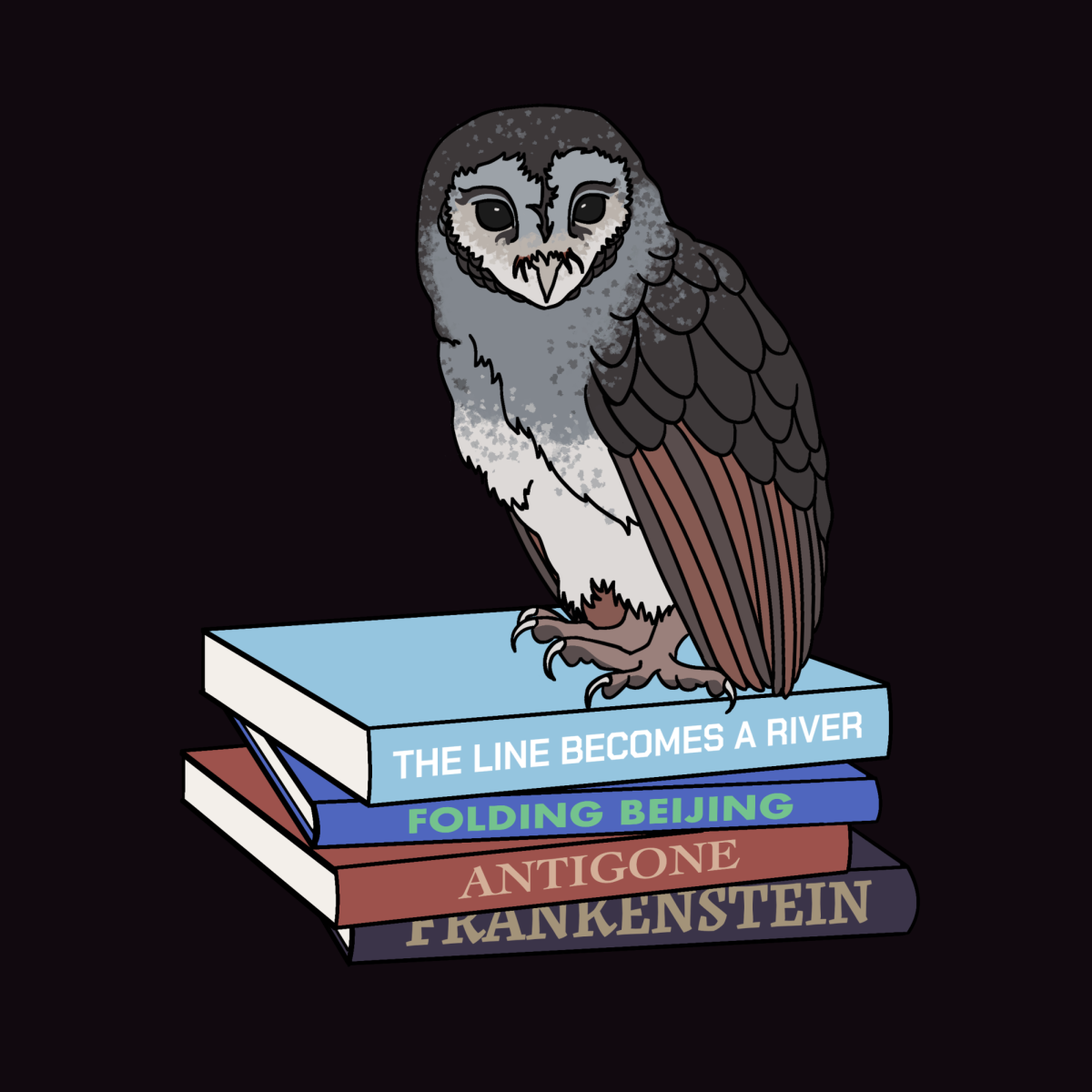
I stepped into the Luther campus having barely read the summer reading, The Line Becomes A River by Francisco Cantú. I was very confused by the abundant use of Spanish, a non-linear narrative and some lengthy imagery in the book. The challenge is much more profound when using English as a second language. It was the first full-length English book I had ever read, and a very demanding one. I even waited until two days before the first deadline to read the book in full. As I tried my absolute best to read the rest of the book at the Brandt Hall study lounge, I started to understand the narrative more. The struggle of immigration in the US. The dire conditions at the Mexican border. How separated families navigate the structural injustices in the legal system. The more I read, the more I became engaged with the subject matter. By the time I finished reading, I found myself bursting into tears. This was a big thing for me, since English readings never evoked such strong emotions before.
Of course, I did not love Paideia right after that. My first paper did not receive a good score, which made me feel very insecure about the outcome of the course. I still struggled a little bit with Antigone, especially since the text was not written in the most digestible way. However, my opinion really started to shift with Folding Beijing. My understanding of Chinese culture, along with my interest in science fiction, gave me a sense of wonder when I wrote my paper. Parasite was even more enticing to me, as I am an avid movie guru. I even talked with my class about some interesting symbols hidden throughout this Oscar-winning masterpiece. (Did you know that the Jjapaguri noodles featured in the movie–expensive sirloin beef coupled with casual Korean ramen–are an interesting symbol of class division and interlinkage?)
The second semester brought a newfound challenge: the Paideia research paper. I am sure this was not just my international-student-problem, but it seemed to be the case that no one in my class had ever written a full-length research paper before. After wrestling with ideas, I came up with a fun topic about a TikTok hashtag that had gone viral in 2020. Learning about the subject matter, as well as synthesizing my arguments from the literature, was definitely a transformative experience for me. I learned a lot about how to find good resources, write coherent arguments and present them in the format of an essay. My writing style now is largely thanks to the experience I had within my Paideia class (shout out to Professor Row-Heyveld!). The proudest Paideia moment for me was when my paper was chosen to be presented at the Learning at Luther showcase. As an international student, this was an amazing confirmation of my capabilities as a student and as an English writer.
However, things took a different turn when I took Paideia 450. My initial feeling was lukewarm, mostly because of my positive experience of first-year Paideia. However, there seemed to be a struggle between the instructor and the students, as my instructor did not have a background in writing courses. This disconnect led to an occurrence when the instructor gave me feedback that I should refer to my “native-speaking friends” to improve my writing skills. Needless to say, I did not take that feedback lightly. The comment made me doubt my ability to write in English and my overall capabilities as a student. While it was not my best essay, I wonder how the response would be different if the same essay were written by an American student.
Despite my contrasting experiences, I still love Paideia. Here’s the thing about Paideia: You might not love every single assigned reading. Some are written in a very strange narrative. Some might come from an entirely different cultural background. You might also not love your instructor. They might not be the most considerate of your capabilities, and you are more than just their feedback. But I encourage you to try. Resist the temptation to use AI for summarizing papers or reading essays and start to fully engage with the materials. Go to your professor’s office hours and vent with them about your academic and personal struggles. Talk to your classmates about anything and everything–this might be the only time you are in the same class with them! Your success at Paideia could go beyond the grades on your papers. It should come from your genuine effort to learn in the community and navigate your college life.
Ultimately, Paideia taught me to live with discomfort. Paideia taught me to struggle with complex readings to find a voice of my own in the multitude of lived experiences. Paideia taught me that my opinion is worthy, which is why I stay committed to writing, in places like CHIPS. Paideia allowed me to study with a community of like-minded students who were not only as confused and sleep-deprived, but also as motivated and intellectually curious as I am.
I do not think that Paideia is a perfect program. There needs to be a greater emphasis on support for students who use English as an additional language, as they might be reading their first full English texts here. Instructors should be thoroughly trained to be more culturally aware and to view students not as labels, but as progressing individuals. The inconsistencies between Paideia 450 programs also need to be addressed, as they could create a confusing, thus unfavorable experience. I hope to see a future Paideia curriculum where students can be guided by dedicated instructors who can navigate them through the academic rigor of a liberal arts education. Paideia should be inherently challenging and we should be able to live with discomfort in order to grow.
If you still hate Paideia at this point, I am sorry that you had a negative experience. However, I hope that you are still able to see some value from this program and appreciate its timeliness and importance for your college career. To say that Paideia is one of the most important courses of my Luther College experience is an understatement and I hope it will be the case for you as well.