The American experiment did not begin in a palace, nor was it set forth on a throne. Through the ages, it has been forged in Civil War winter camps where the fate of the Union itself hung fragile; through the struggle of suffragettes who insisted that democracy could not be whole in exclusion; on factory floors that powered a nation through world war; on a bridge in Selma; and by the voice of a preacher daring the nation to dream of justice not yet realized.
Ours is a Constitutional Republic shaped by repeated acts of civic responsibility. One in which political authority is woven into society, not towered above it. This distinction remains among America’s most radical ideas.
Time and again, it was not those in high office who most faithfully carried forward the precious lights of Liberty and Justice. It was ordinary people, without titles. It was citizens who chose participation over despair and responsibility over retreat—who pressed on in moments of uncertainty, even when the nation fell short of its ideals. Abolition did not originate in the halls of Congress. The labor movement, women’s suffrage, and the Civil Rights Movement did not. They arose from organizing—often slow, often imperfect, but rooted in a shared insistence that the country live up to its own creed.
This is the story of a national renewal—hallowed by war and peace, hope and hardship, peril and prosperity, abundance and sacrifice, trial and triumph.
The story of America has never been finished. It is written, generation by generation, by those who refuse to give up on the promise of this republic. And as I pen this in the context of events currently unfolding in our national life, that unfinished work has come back into view.
In recent months—and, in truth, since the turn of the century—the health of our democratic institutions has come into sharper question. Trust in public life has eroded. Political discourse has grown more brittle. Too many feel either permanently outraged or permanently disengaged, with little space in between for disciplined, constructive participation. Institutions are increasingly treated either as untouchable relics beyond criticism or as irredeemable failures unworthy of attention.
Both instincts are equal and opposite expressions of cynicism.
In moments like today’s, the temptation is understandable: to withdraw, to despair, or to treat politics as a spectacle. That temptation must be resisted.
My response to this moment is simple: organization.
America’s pursuit of a more perfect Union has always depended not merely on ideals captured in elegant parchment, but on civic institutions capable of translating those ideals into durable practice. Political parties, civic associations, labor organizations, churches, and student groups have historically served as the connective tissue between the state and the citizens it must serve. They are imperfect. They are frustrating. And they are constantly in need of reform—but without them, participation collapses into chaos or dissolves into apathy.
College campuses, like ours, play a quiet but essential role in this tradition. They are spaces where political identities take shape, where civic habits take root, and where future leaders first learn the mechanics of democratic participation. Participation, however, does not emerge spontaneously. It requires people willing to commit to the often quiet, often thankless, and unglamorous work of
building something that lasts longer than a single moment of attention or any one news cycle. This is especially true in a political-media culture increasingly shaped by algorithmic incentives that reward immediacy over reflection and outrage over organization.
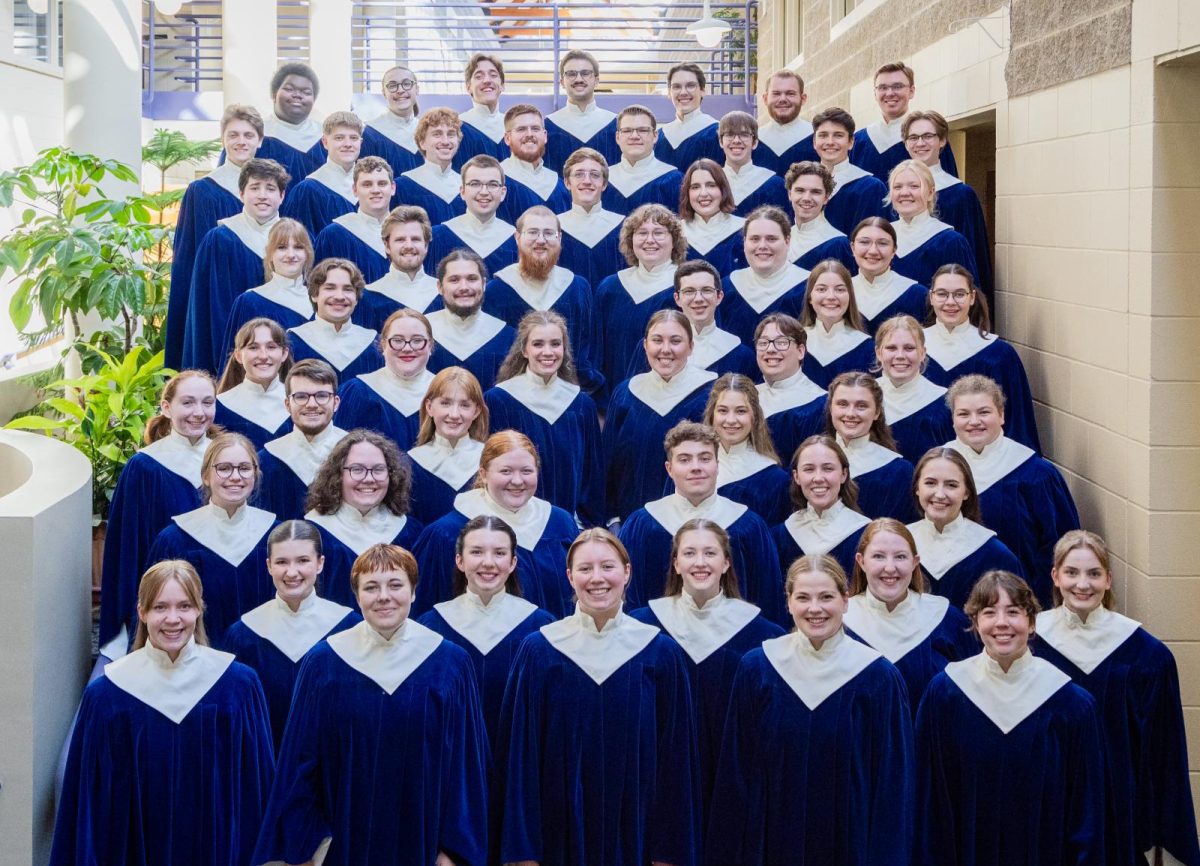
That recognition has led a group of students and me to reconstitute a Democratic Party organization at Luther College, this time as a chapter of College Democrats of America.
Our choice is not driven by episodic outrage, nor by the belief that any single faction or political tribe holds a monopoly on virtue or democratic legitimacy. If political parties remain central vehicles of democratic participation—as history suggests they do—then learning how to engage them responsibly is itself an act of civic stewardship. That this work takes place within a partisan structure does not negate its broader civic purpose; it tests whether parties can still serve the Republic rather than themselves.
The organization we are building is grounded in a few commitments.
First, that democratic participation is a learned practice supported by voter education, issue literacy, and institutional knowledge. That citizenship is not merely a title; it is a discipline rooted in the tradition of republican life. It is best practiced by those who understand the systems they inherit, the responsibilities they assume, and the consequences of their choices. Few in history have articulated this
more clearly than Thomas Jefferson, who observed that an educated citizenry is a vital requisite for our survival as a free people.
Second, that political disagreement is inevitable in a pluralistic society, but it need not dissolve into cynicism or devolve into spectacle.
And third, that organizing—when done lawfully and responsibly—remains one of the few proven ways citizens translate concern into collective action. It is how norms are defended, how coalitions are built, and how institutions are renewed rather than abandoned.
Few trends alarm me more than the growing tendency, especially among younger generations, to view political institutions as either hopelessly corrupt beyond redemption or irrelevant altogether. At its best, that posture is too easy. At its worst, it is corrosive to democracy. Institutions left unattended do not disappear. They are captured. Hollowed out. Distorted.
The Founders understood this danger well. They knew that liberty is not threatened only by tyranny imposed from above, but by passions unleashed from within. They refused to entrust the Republic to the goodwill or genius of any single leader or faction. Instead, they placed their faith in institutions: checks and balances, pluralism, federalism, and a civil society strong enough to restrain ambition without extinguishing it.
But institutions, by themselves, are not self-sustaining. They endure only when We the People accept solemn responsibility for their upkeep. Organizing is one way that responsibility is exercised. It asks more of us in requiring patience, procedural respect, and a willingness to work with others who do not agree on everything. It is slower than outrage and less glamorous than commentary, but it is how durable change has historically occurred in this country.
The choice to organize, then, is not an expression of certainty. It is an expression of responsibility. A recognition that democracy is not self-executing, and that its preservation depends on participation rooted in structure and norms.
There will be disagreement about politics on this campus, as a free society requires. But disagreement need not produce disengagement. Nor must concern give way to despair. What we are attempting at Luther College is modest against the scale of national challenges, but not in meaning. The invitation
remains open to those who believe that democracy is sustained not by spectators, but by participants—and that organizing, however imperfect, remains one of the most serious responses a citizen can make.
I will close with this. The American experiment has never depended on perfection. It has depended on citizens who, in each generation, choose to organize, to maintain, and to renew the Republic they inherit. That work remains unfinished, and it remains ours.